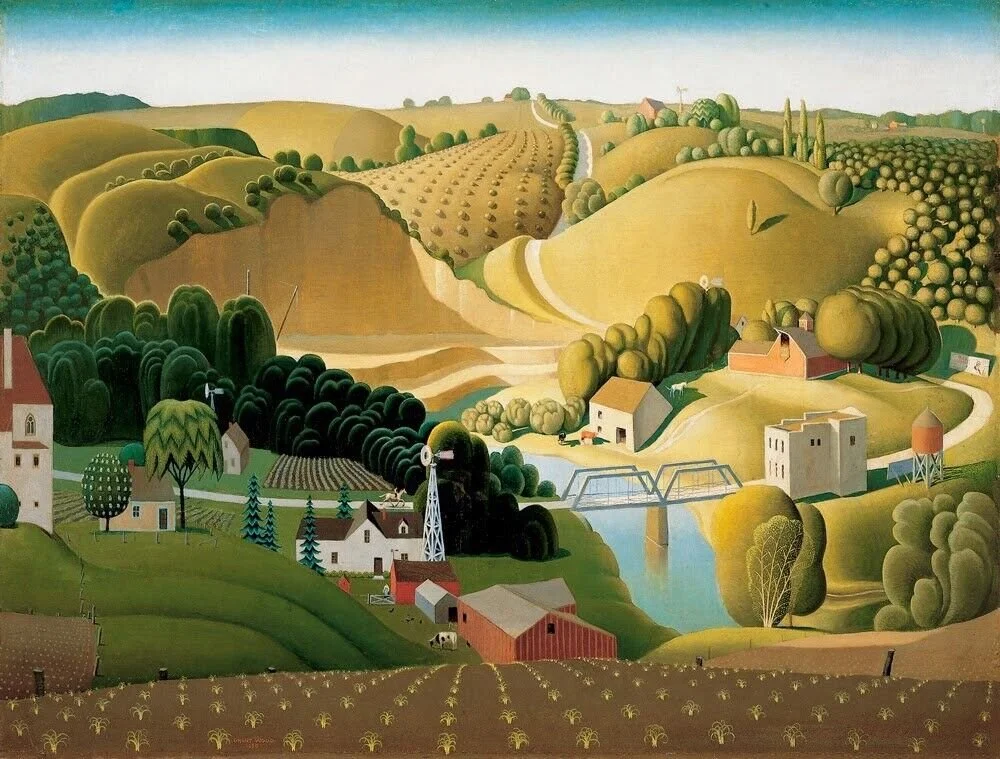
GRANT WOOD
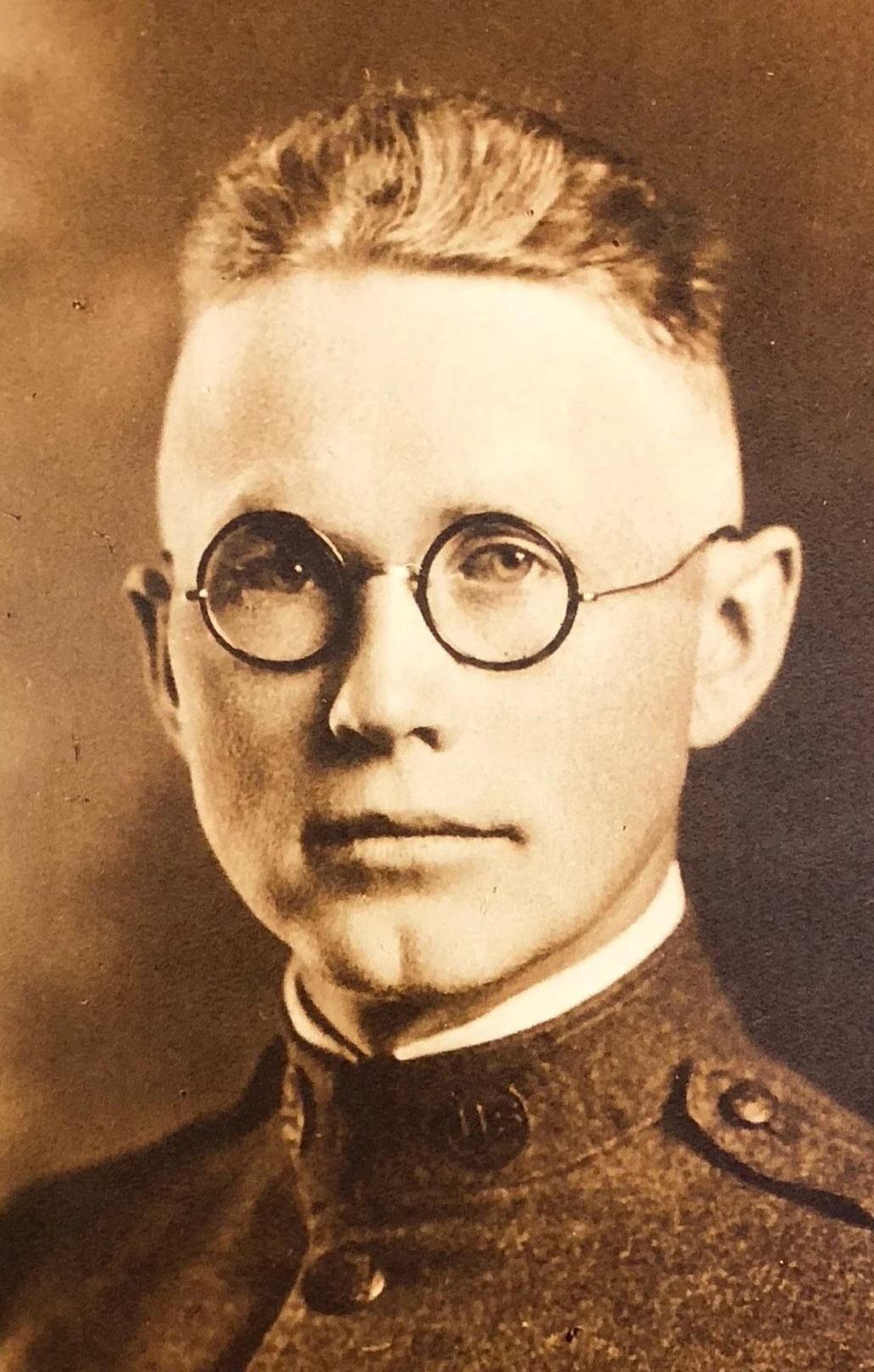
Pvt. Grant Wood, U.S. Army
World War I
Grant Wood: Iowa Artist and American Icon
Grant Wood was born on a farm near Anamosa, Iowa, on February 13, 1891, to Francis Maryville Wood and Hattie DeEtte Weaver Wood. After his father died in March 1901, Wood’s mother moved the family to Cedar Rapids, Iowa, where his interest in art continued to grow.
Wood won his first art contest in 1905 with a colored drawing of oak leaves submitted to a national Crayola competition. He graduated from Washington High School in Cedar Rapids in 1910, then studied design in Minneapolis and later in Chicago. During World War I, Wood served in the United States Army, where he painted camouflage on military vehicles.
Between 1920 and 1928, Wood made four trips to Europe, painting in France, Italy, and Germany. During this period, he worked in an Impressionist style and focused largely on landscapes. Around 1928, his artistic style began to shift toward what would later be known as Regionalism, a movement that celebrated rural American life. His 1929 painting Woman with Plants, a portrait of his mother, was one of his first works in this new style.
In addition to painting, Wood was an artist, teacher, silversmith, welder, college professor, and designer of homes, furniture, and fabric. He was also a founding member of the Stone City Art Colony, which encouraged artists to study and create in Iowa.
Wood married Sara Sherman Maxon in 1935; the couple divorced in 1939. He died of pancreatic cancer on February 12, 1942, just two-hours before his 51st birthday. His work continues to celebrate Iowa, rural life, and the people and places that shaped his vision.